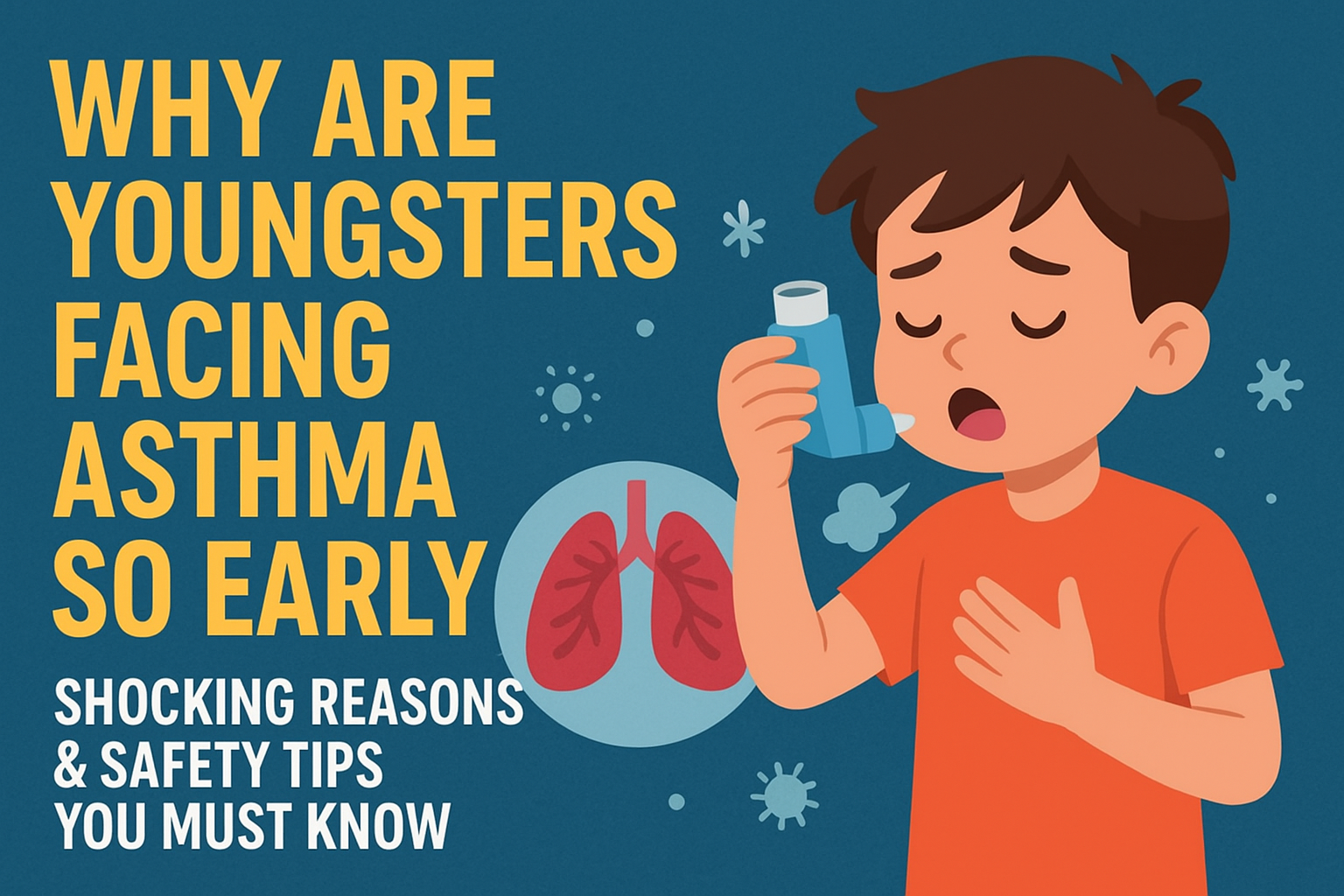
Why Are Youngsters Facing Asthma So Early? Shocking Reasons & Safety Tips You Must Know”
Asthma is no longer just an adult health issue — today, children, teenagers, and young adults are increasingly reporting breathing problems, allergies, and asthma symptoms. Schools, hospitals, and even home environments are seeing a sudden spike in young people struggling to breathe. Parents are worried, doctors are concerned, and the trend doesn’t seem to stop.
So, why is this happening?
Why are young lungs becoming weaker?
And most importantly — what can families do to prevent it?
Let’s break down the real reasons behind the rising asthma crisis among youngsters and the precautions that can help.
1. Air Pollution: The Biggest Enemy of Young Lungs
One of the most powerful reasons behind rising asthma cases is poor air quality.
Children breathe faster than adults, meaning they inhale more polluted air per minute, which directly affects their lungs.
Common sources of harmful pollutants include:
- Vehicle smoke
- Dust storms and construction work
- Factory emissions
- Burning waste and plastic
- Firecrackers
- Rising PM2.5 levels in cities
Polluted air inflames the airways, making breathing difficult and triggering asthma attacks. Studies show that children growing up in polluted cities have a much higher risk of developing long-term breathing disorders.
2. Indoor Pollution: The Hidden Threat Parents Ignore
Most parents think the home is a safe zone, but indoor spaces can be more polluted than outdoor air.
Indoor asthma triggers include:
- Perfumes, incense sticks, room fresheners
- Mosquito coils and sprays
- Dusty carpets, stuffed toys, and curtains
- Damp walls (mold and fungus)
- Poor ventilation
- Smoke from the kitchen
Children spend more time indoors than ever — making them more exposed to indoor pollutants.
3. Genetics: Family History Still Plays a Role
If a parent has asthma, allergy, sinus problems, or eczema, the child has a higher chance of developing breathing issues.
But remember:
Genetics sets the stage — lifestyle and environment decide the outcome.
That means early care and awareness can significantly reduce severity.
4. Modern Lifestyle Is Making Lungs Weak
Lifestyle changes over the last decade have quietly harmed children’s respiratory health.
Less Physical Activity
Kids today don’t run or play outside as much.
The result?
Weak lungs + low immunity.
Increased Screen Time
Hours of sitting → shallow breathing → reduced lung capacity.
Unhealthy Food Habits
Fast food, chips, sugary drinks, and packaged snacks cause inflammation.
Inflamed airways = higher asthma risk.
Obesity
Extra body weight puts pressure on the chest, causing breathlessness.
Today’s digital lifestyle not only weakens the body but directly impacts respiratory health.
5. Climate Change & Seasonal Allergies
Climate change is causing:
- Longer allergy seasons
- Higher pollen counts
- Sudden temperature changes
These factors irritate sensitive airways and trigger asthma symptoms in youngsters who were previously healthy.
6. Smoking & Vaping: Rising Danger for Teens
Teen vaping is a growing problem worldwide.
Vape chemicals irritate lungs and can cause:
- coughing
- chest tightness
- wheezing
- long-term lung damage
Even second-hand smoke from adults at home increases asthma risk in children.
7. Hygiene Hypothesis: Too Clean, Too Sensitive
Modern homes are extremely sanitized. Kids have less exposure to natural germs because:
- fewer outdoor activities
- constant sanitizers
- reduced contact with nature
This weakens the child’s immune system, making them overreactive to dust, pollen, and pollution.
A little exposure to natural environments is good for building immunity.
Safety Precautions Every Parent Must Follow
1. Keep Air Clean & Fresh
- Open windows for cross-ventilation
- Avoid incense, room sprays, and mosquito coils
- Keep the home dust-free
- Use exhaust fans in the kitchen
- Wear masks during high pollution days
2. Strengthen the Lungs
The best lung-strengthening activities for kids:
- Swimming
- Cycling
- Running
- Yoga and pranayama
- Deep breathing exercises
These improve lung capacity and reduce asthma severity.
3. Boost Immunity Naturally
Increase:
- Fruits
- Vegetables
- Nuts & seeds
- Warm water
- Good sleep
Reduce:
- Packaged snacks
- Sugary drinks
- Deep-fried foods
A strong immune system = fewer asthma triggers.
4. Avoid Smoke at All Costs
- No smoking inside the home
- Keep children away from smokers
- Guide teens to avoid vaping
5. Be Alert to Symptoms
Common early signs:
- Cough during night
- Wheezing
- Shortness of breath after playing
- Tight chest
- Frequent coughing during winter
Early diagnosis prevents complications.
Final Words: Awareness Today Prevents Illness Tomorrow
The rise in asthma among children and youngsters is a serious health concern. While pollution and genetics play a major role, modern lifestyle habits and indoor pollution also contribute heavily.
With timely precautions, healthy routines, and awareness, we can protect young lungs and help them breathe freely again.
1 thought on “Why Are Youngsters Facing Asthma So Early? Shocking Reasons & Safety Tips You Must Know””