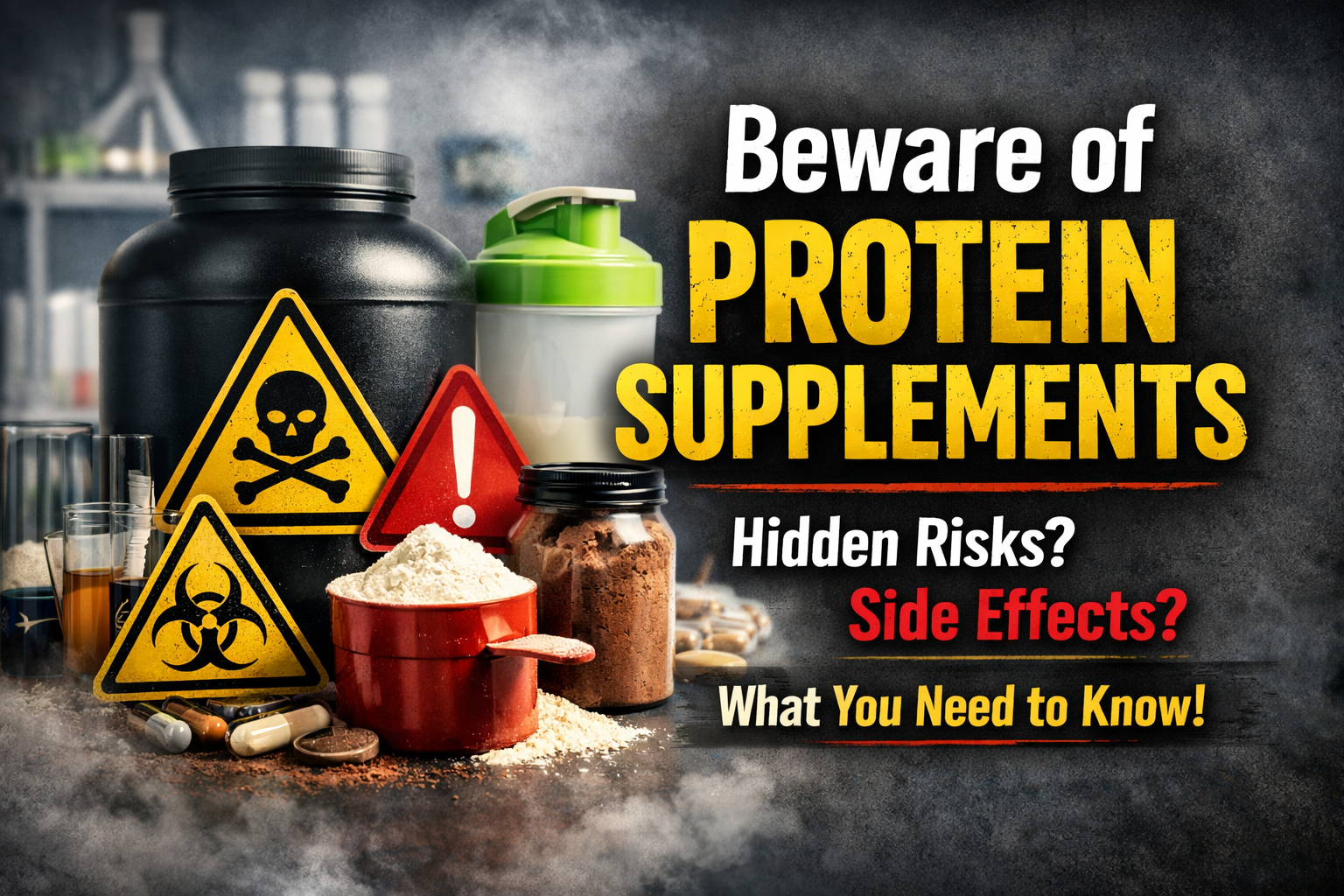
Protein Supplements Side Effects (2026) | What Does Science Really Say?
In the fitness and wellness world, protein supplements — especially powders and shakes — are practically household names. From athletes and bodybuilders to everyday gym‑goers and even people trying to lose weight, these products are widely used to meet daily protein needs. However, Protein supplements side effects are often ignored, but daily use of protein powders may affect kidneys, liver, and digestion. This article explains what science really says in 2026.
This article explores the potential dangers, scientific evidence, and smart ways to use protein supplementation safely — or avoid it altogether when unnecessary.
1. What Are Protein Supplements?
Protein supplements are products — typically powders, shakes, or bars — that provide concentrated protein extracted from sources like whey (milk), casein, soy, pea, rice, or eggs.
They are marketed to help with:
- Muscle growth and recovery
- Weight management
However, unlike whole foods, these supplements are not regulated like medicines, meaning quality, purity, and safety can vary widely between brands. (Harvard Health)
2. Why People Use Them — Legitimate Benefits
There are scientifically supported contexts where protein supplements can be helpful:
- Post‑exercise recovery: Whey and other fast‑absorbing proteins can aid muscle protein synthesis after strength training.
- Meeting dietary needs: People with limited appetite, restrictive diets (e.g., vegans), or higher protein needs may find supplements useful.
- Convenience: It’s often easier to mix a shake than prepare high‑protein meals.
Still, these benefits are secondary to whole foods and not required for most healthy individuals if they already get sufficient protein from a balanced diet.
3. Hidden Risks and Side Effects
A. Quality & Contamination Issues
Unlike drugs, protein powders and supplements are not pre‑tested for purity or safety before hitting shelves. Studies and consumer tests have found:
- Mislabeling of protein content
- Contaminants due to poor quality control
These toxins can be harmful over time, especially with long‑term use. (Kumaraguru College of Technology)
B. Kidney & Liver Strain
High protein intake — especially from concentrated supplements — may increase workload on the kidneys and liver, particularly in those with underlying conditions. Some scientific reviews have linked chronic and excessive supplement use with elevated liver enzymes or kidney stress. (PubMed)
This does not mean protein automatically damages kidneys in healthy adults, but it highlights why moderation and medical supervision matter.
C. Digestive Discomfort
Common complaints include:
- Bloating
- Gas
- Diarrhea or constipation
These are more likely if someone has:
- Lactose intolerance
- Sensitivity to additives
- Poor gut tolerance
Some protein sources (e.g., whey or casein) contain lactose, a sugar many adults struggle to digest. (Harvard Health)
D. Weight Gain & Nutrient Imbalance
Protein supplements can be high in calories, sugar, or additives. On their own, these drinks may contribute to calorie excess and weight gain if not balanced with overall diet. (The Times of India)
Relying on supplements instead of whole foods can also reduce intake of essential vitamins, minerals, and antioxidants naturally found in foods like lentils, eggs, fish, and dairy. (The Times of India)
E. Allergies & Sensitivities
Some people react to:
- Whey or casein (dairy proteins)
- Soy protein
- Added sweeteners and flavorings
Allergic reactions can range from mild (itching, rashes) to severe (anaphylaxis). (ETHealthworld.com)
F. Hormonal and Skin Effects
There is evidence linking certain protein supplements — especially whey — with hormonal effects that may trigger acne in susceptible individuals by influencing insulin‑like growth factor (IGF‑1) and sebum production. (Health)
4. Are Protein Supplements Safe? What the Science Says
Safety depends on three main factors:
- Who you are: Healthy young adults generally tolerate moderate protein supplementation well.
- How much you consume: Excessive consumption increases risk of side effects.
- Product quality: Always opt for reputable brands with third‑party testing.
Scientific consensus suggests:
- Protein supplements can be used safely in moderation for people with increased needs (athletes, elderly, certain medical conditions).
- For most healthy adults, whole food proteins are sufficient and preferable.
- There is limited data on long‑term effects of chronic high‑dose supplement use. (Harvard Health)
5. Expert Guidance: When to Use — and When to Avoid
✔ Use Protein Supplements If:
- You have higher protein needs due to intense training.
- You have limited food intake or digestive issues.
- A registered dietitian or doctor recommends them.
✖ Be Cautious or Avoid If:
- You are not physically active
- You already meet protein requirements through food
- You have kidney, liver, or metabolic disorders
- The product has suspect quality or additives
Leading health bodies (including India’s ICMR) encourage meeting protein needs through natural foods before considering supplements. They stress that most people don’t require these products unless medically indicated. (The Times of India)
6. Tips for Safe Consumption
Check third‑party testing seals (e.g., NSF, Informed Choice).
Read ingredient labels — avoid high sugar, artificial additives, proprietary blends.
Stay hydrated — protein metabolism increases water needs.
Balance with whole foods like eggs, beans, fish, dairy, lentils, nuts.
Consult a health professional — especially if you have health conditions.
7. Conclusion — Smart, Not Blind, Supplementation
Protein supplements are not inherently dangerous, but they are not magic bullets either. When misused, poorly chosen, or overconsumed, they can lead to side effects ranging from digestive issues to heavy metal exposure or metabolic imbalance.
The key message? 👉 Know your needs, focus on quality, and always prioritize whole foods. Supplements should complement — not replace — a balanced diet.
It should be taken in supervision of Doctor’s if needed.
Read More:
10 Powerful Food Combinations That Can Transform Your Body Faster Than Gym Workouts
How Much Protein Do You Need Daily for Weight Loss & Thyroid Health? (Exact Guide)